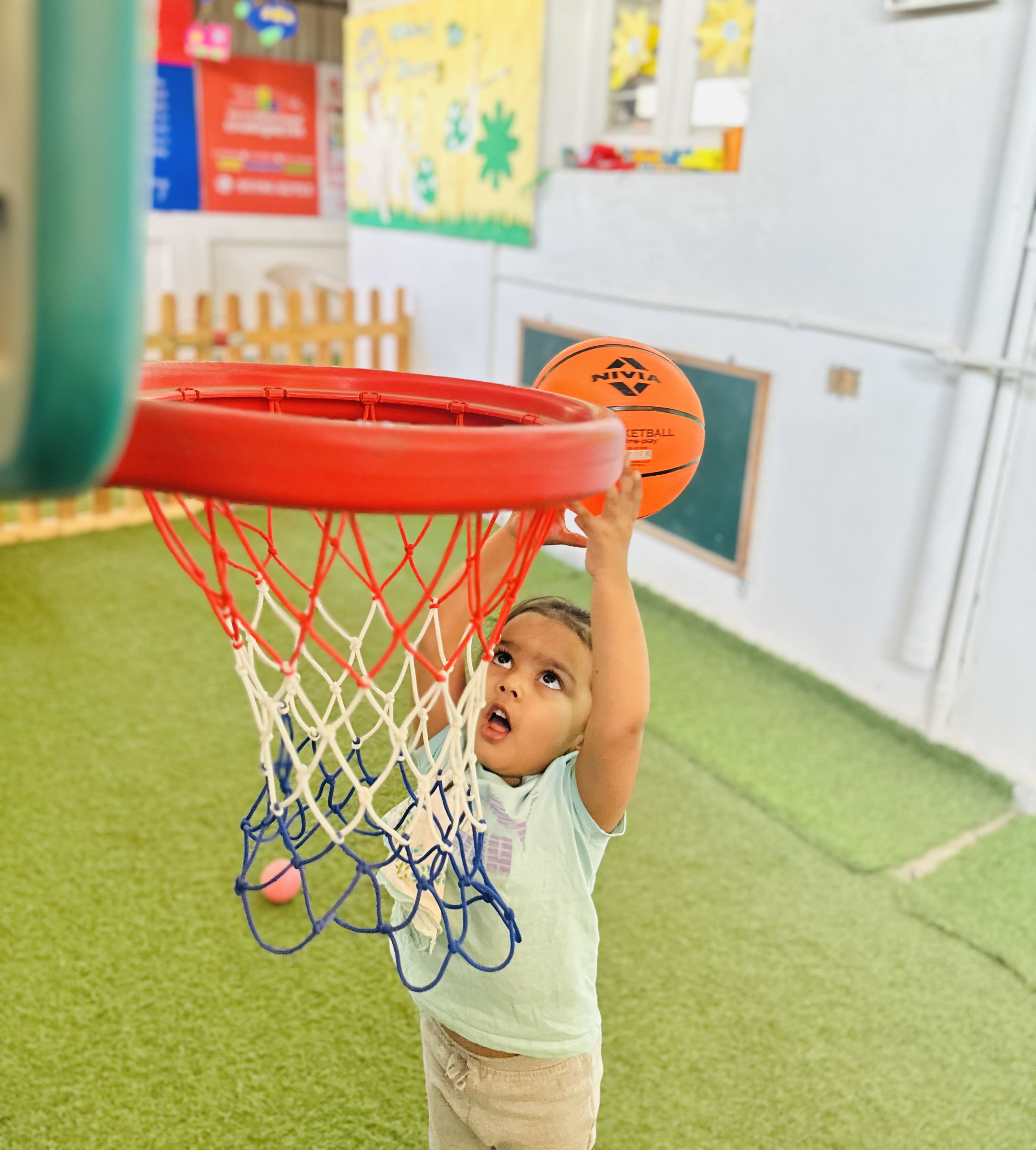
When you walk into a vibrant kindergarten classroom, you might see children building tall towers with colorful blocks, pretending to be doctors in a dramatic play corner, or getting their hands dirty with finger paints. To the untrained eye, it simply looks like they are "just playing." However, years of extensive psychological and educational research tell us a vastly different story. Play is, in fact, the serious work of childhood.
What Exactly is Play-Based Learning?
Play-based learning is an educational framework where children learn to make sense of the world around them through play. It is not merely a break from academic learning; it is the vehicle through which early academic concepts are naturally absorbed. It encompasses both structured play (guided by educators with specific learning outcomes) and unstructured, child-led free play.
"Play is the highest form of research." — Albert Einstein
The Core Benefits of Learning Through Play
1. Cognitive Development and Critical Thinking
When children engage in play, their brains are working in overdrive. Building a bridge out of blocks isn't just a physical activity; it requires an understanding of balance, gravity, and geometry. When the bridge falls, the child engages in problem-solving and critical thinking to figure out how to build it stronger the next time. Play introduces foundational math and science concepts in a tangible, hands-on way.
2. Social and Emotional Growth
Sharing toys, taking turns, and negotiating roles in a make-believe game are complex social tasks. Through interactive play, children learn empathy, how to resolve conflicts, and how to self-regulate their emotions. They learn how to read social cues and collaborate with their peers to achieve a common goal.
3. Language and Communication Skills
Whether they are explaining the rules of a game, acting out a story, or asking questions about a bug they found in the garden, play creates organic opportunities for language development. Children expand their vocabularies and learn the nuances of verbal and non-verbal communication while interacting with educators and classmates.
4. Physical Development and Fine Motor Skills
Physical development is intrinsically linked to play. Gross motor skills are honed when children run, jump, and climb on the playground, building strength, coordination, and cardiovascular health. Fine motor skills, essential for writing later on, are developed through activities like threading beads, using safety scissors, or molding clay. These seemingly simple activities build the small muscle control in their hands and fingers.
5. Fostering Creativity and Imagination
In a world that is rapidly changing, creativity is one of the most valuable skills a person can possess. Play allows children to think outside the box, invent new scenarios, and approach problems from unique angles. When a cardboard box becomes a spaceship or a pile of leaves becomes a magical potion, children are exercising their imaginative muscles, which lays the groundwork for innovative thinking in adulthood.
The Role of Educators as Facilitators
In a true play-based environment, the teacher is not a traditional lecturer but a skilled facilitator and keen observer. Educators carefully design the classroom space, providing open-ended materials that provoke curiosity. They step in to ask open-ended questions like, "I wonder what would happen if you added this block?" thereby extending the child's thinking without taking over the play. This guided discovery is a hallmark of high-quality early childhood education.
How Kings Court World School Embraces Play
At Kings Court World School, we understand that early childhood is the most crucial period of human development. We do not believe in forcing rote memorization on young minds. Instead, our carefully curated programs—from Playgroup (Jal) to Senior KG (Akash)—are rooted deeply in the principles of play-based and experiential learning.
Our educators act as facilitators, designing stimulating environments where children feel safe to explore, question, and create. Whether it is sensory sand-play in our Agni nursery or complex puzzle-solving in Vayu, the Kings Court World School curriculum ensures that your child is developing holistic skills—cognitive, physical, and emotional—all while experiencing the pure joy of childhood.
Explore Our ProgramsPreparing for the Future
The skills fostered through play-based learning—creativity, adaptability, teamwork, and resilience—are exactly the 21st-century skills needed for future success. By prioritizing play in the early years, we aren't delaying "real learning"; we are building a stronger, broader foundation for all future academic endeavors.
As parents and educators, the best thing we can do is provide the time, space, and resources for children to immerse themselves in play. Let them get messy, let them ask a hundred questions, and let them lead the way.